



Traditional Van Gujjar Music and Dance: Instruments and Occasions
Across the Himalayan foothills, music helps Van Gujjar families carry memory, faith and social knowledge between forest settlements and seasonal pastures. Songs may accompany buffalo herding, household work, celebrations or long journeys, while dance brings relatives and neighbours into a shared rhythm.
These traditions are living expressions of pastoral culture rather than performances separated from daily life. Their sound is shaped by migration routes, forest landscapes, family histories and the changing relationship between indigenous communities and the authorities who manage land and natural resources.
Music In A Pastoral Landscape
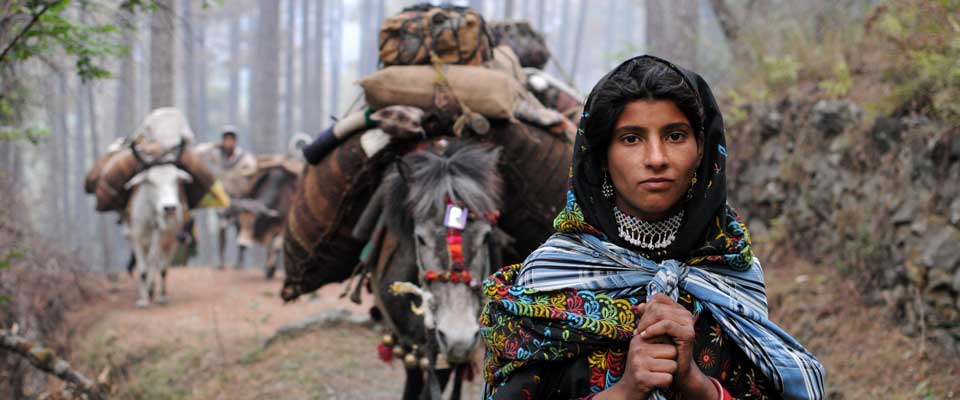
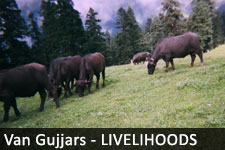
Van Gujjar musical traditions are closely connected with movement. Families traditionally travel with buffalo between winter settlements in the Shivalik foothills and summer grazing areas in the Himalayan region. A melody sung on the trail can ease a long journey, soothe animals or keep a group together across a wooded slope.
The voice is often the most accessible instrument. Lullabies, devotional verses, humorous exchanges and improvised couplets can be performed without specialist equipment. Lyrics may describe affection, separation, weather, animals, forest life and the practical pressures of earning a living through pastoralism.
Water is also part of this cultural landscape. When families plan routes around reliable springs and grazing areas, music and storytelling accompany knowledge of the terrain; the discussion of freshwater springs shows why these sources matter to both herders and villages.
Instruments And Rhythmic Texture
Percussion gives many community gatherings their physical energy. Dhols, dholaks and frame drums such as the dafli may establish a strong beat for singing and group dancing. Handclaps, footwork and call-and-response patterns can add layers of rhythm, allowing people of different ages to participate.
Flutes and other wind instruments may provide a contrasting, more reflective sound, particularly during outdoor gatherings or informal moments between activities. In some settings, newer instruments and recorded music have joined older forms. This does not make the tradition less authentic; it shows how cultural practice adapts while retaining familiar melodies, rhythms and social meanings.
Instrument choice may vary between families and regions in Uttarakhand, Himachal Pradesh and Uttar Pradesh. Some occasions rely on a single drum and unaccompanied voices, while others bring together several performers. The value lies in participation and shared recognition, rather than in a fixed stage arrangement.
Occasions For Song And Dance
Religious festivals and seasonal celebrations are important opportunities for music and dance. Devotional singing may honour local spiritual traditions, while social dancing can mark a wedding, a birth, a successful return from migration or a gathering of extended family. Performances often create space for elders to pass on words, rhythms and stories to younger relatives.
Work also provides occasions for musical expression. Singing can accompany domestic tasks, buffalo care and travel between settlements. During evening gatherings, people may use verse to remember ancestors, comment on village events or express longing for relatives living elsewhere. These forms preserve emotional history as much as they provide entertainment.
For audiences in Australia, the closest comparison may be the way music accompanies a community festival, a multicultural gathering in Melbourne or a family celebration after a Saturday farmers’ market. The setting is different, but the principle is familiar: music strengthens relationships when people share food, stories, work and place.
What The Songs Preserve
Oral music can hold practical knowledge that is rarely written down. A verse may recall a grazing route, a difficult monsoon, a respected elder or the location of a useful forest resource. Repeated lines help children learn language, values and social responsibilities through listening and participation.
The following themes commonly connect music with community life:
- Seasonal movement between forest and village settlements
- Affection, separation and family relationships
- Buffalo husbandry and pastoral work
- Devotion, blessings and festival observance
- Memories of forests, springs and ancestral places
Cultural continuity is especially significant when access to customary forests, grazing grounds and settlements is affected by administrative decisions. Rights-based work, social mobilisation and dialogue with government can help communities protect the conditions in which these traditions remain meaningful.
Respectful Cultural Exchange
People in Australia may encounter Himalayan music through universities, diaspora events, community festivals or online archives. Audiences should treat these traditions as cultural knowledge, not simply as exotic entertainment. Asking permission before recording, identifying performers accurately and following local guidance about sacred or private material are important forms of respect.
Practical support for cultural continuity can include:
- Listening to community-led recordings and accounts
- Supporting indigenous rights and pastoral livelihood projects
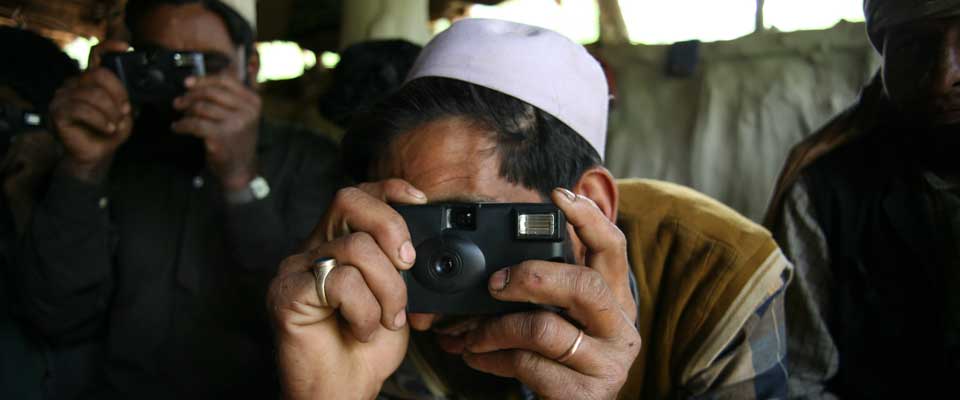
- Sharing photographs only with informed permission
- Learning about forest, domicile and land rights
- Valuing community leadership rather than extracting performances
This approach also fits Australian expectations around cultural authority and Indigenous cultural protocols. The Native Title Act 1993 recognises important connections between Aboriginal and Torres Strait Islander peoples and Country, while local organisations and cultural centres often set their own rules for photography, recording and public presentation. Similar care is appropriate when engaging with Van Gujjar communities.
For Australians accustomed to buying fresh milk, attending weekend markets or following environmental rules around water and protected land, the connection between culture and livelihood may be especially clear. Music survives when families have secure homes, viable pastoral work, access to water and the freedom to maintain community relationships.
SOPHIA’s work offers a way to learn about these connections while supporting community-led action across northern India. Explore its projects, media resources and partnership opportunities, and help amplify Van Gujjar voices with respect for their rights, knowledge and cultural life.