




Helping Stateless People Secure Government Recognition
For Van Gujjar families and other mobile communities in northern India, an identity document can determine whether a person can access schooling, healthcare, food support, banking and lawful employment. Without recognised papers, everyday interactions with public institutions may become uncertain or impossible.
SOPHIA works with communities in Uttarakhand, Himachal Pradesh and Uttar Pradesh to help people navigate these systems. Its approach combines community mobilisation, rights-based advocacy and practical engagement with government offices, while recognising the realities of seasonal pastoral life.
The phrase “stateless individuals” can describe people who lack effective proof of nationality or cannot obtain documents confirming their identity and residence. In practice, many families face overlapping problems: missing birth records, inconsistent names, limited literacy, displacement, inaccessible offices and official requirements designed for settled households.
For an Australian audience, the contrast is significant. A person in Melbourne or Brisbane may routinely use a driver licence, Medicare card, passport or digital identity to open a bank account, rent a home or collect a parcel. For a Van Gujjar family moving with buffalo herds, those basic systems can be far less accessible.
Why Official Identity Matters
Identity documents create a bridge between a person and public services. They may support applications for birth registration, school enrolment, social protection, health schemes, bank accounts, voter registration or residence-related certificates. They can also help families prove relationships and protect children from being excluded from formal systems.
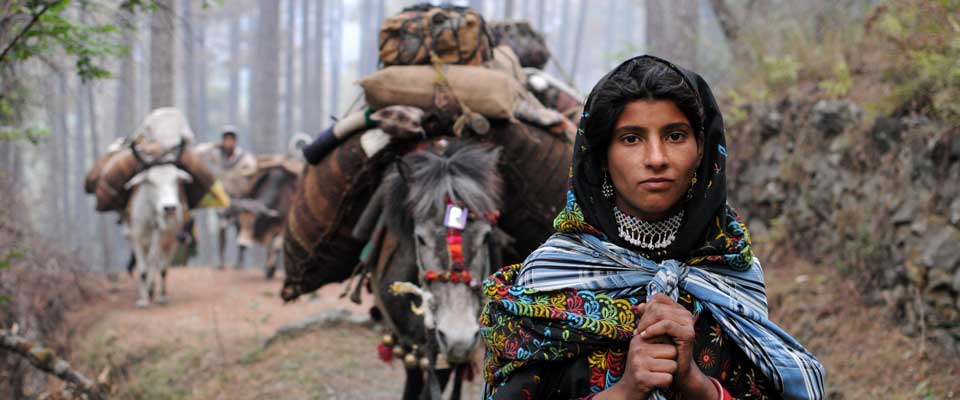
Documentation is especially important for communities whose livelihoods depend on movement between forests, foothills and village settlements. A household may spend part of the year in pastoral camps and another period near a permanent village, making fixed-address requirements difficult to satisfy.
Barriers Faced By Mobile Families
Administrative systems often assume that people have a permanent address, a complete paper trail and the ability to return repeatedly to the same office. Van Gujjar families may instead have records with spelling differences, outdated locations or missing links between generations.
Distance and cost add further pressure. Travel to a government office can mean losing work, arranging transport for children and livestock, and paying for photocopies or other formalities. Language, limited confidence in bureaucratic settings and fear of rejection can discourage applications before they begin.
SOPHIA’s Community-Based Approach
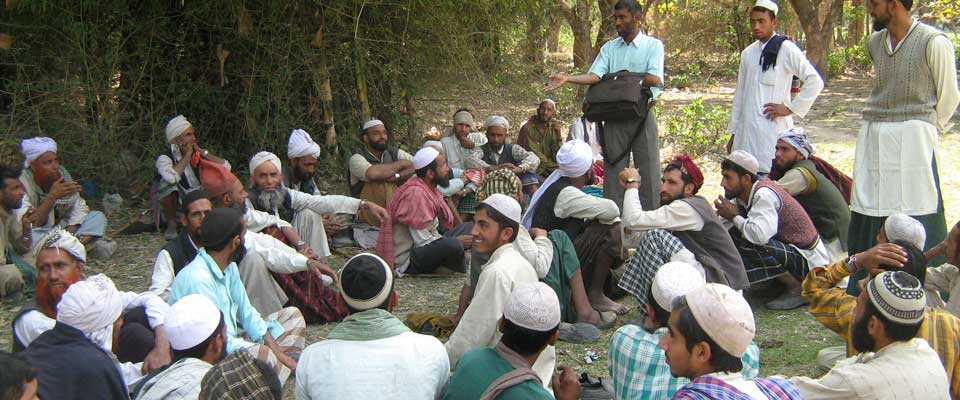
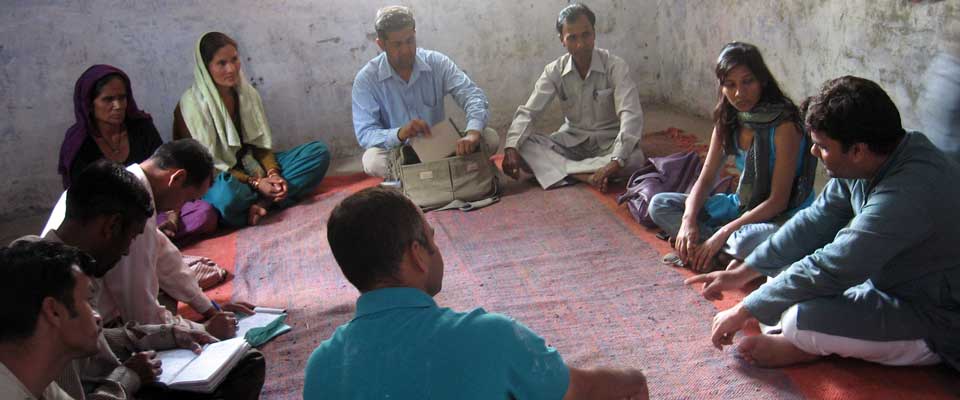
SOPHIA begins by listening to families and identifying which documents are missing, inaccurate or inaccessible. Community meetings and household-level follow-up can clarify each person’s situation, distinguish between identity and residence requirements, and establish a realistic sequence of applications.
The organisation can then support communication with local officials, help residents understand procedures and encourage government engagement. This role is facilitative rather than a substitute for public authorities: the relevant department remains responsible for verification and issuing an approved document.
Linking Documentation With Seasonal Mobility
A reliable identity process must account for where people actually live throughout the year. Mapping movement patterns helps identify which offices, village institutions and service providers are most relevant to each family, rather than treating mobility as evidence of administrative non-compliance.
SOPHIA’s work on seasonal migration routes illustrates why pastoral geography matters. Understanding routes, stopping points and return patterns can improve outreach and make follow-up more practical for both communities and officials.
Working With Government Systems
SOPHIA’s engagement may involve local administration, elected representatives, welfare departments and other public institutions. Constructive dialogue can help officials understand why a mobile household may have genuine ties to several places and why standard proof-of-address expectations need careful interpretation.
This work also supports accountability. When applications are delayed or rejected, families need clear reasons and lawful channels for follow-up. Community advocacy can turn isolated documentation problems into broader discussions about forest rights, domicile recognition, education access and social security.
What Documentation Can Change
An identity card does not solve every problem, and it does not automatically establish nationality. Its value depends on the document’s legal purpose, the information it contains and whether institutions accept it. Careful explanations are essential so families understand what each card proves and what it does not.
For people in Australia, the closest everyday comparison may be the difference between having a photo ID and having a document that proves citizenship or immigration status. Australian systems operate under frameworks including the Migration Act 1958 and the Australian Citizenship Act 2007, while access to services may also involve Medicare, Centrelink or state-based records. The comparison shows why identity, residence and nationality should not be treated as interchangeable.
Ways To Support Rights-Based Documentation
SOPHIA’s documentation work is most effective when it is connected to longer-term community organising and practical support. Useful contributions include:
- Support outreach to mobile pastoral settlements and remote Himalayan villages.
- Share accurate information about birth registration, residence records and public services.
- Strengthen partnerships between community representatives, NGOs and government offices.
- Fund travel, photocopying, translation and case-follow-up costs for vulnerable households.
- Promote respectful storytelling that protects privacy and avoids portraying communities as helpless.
In Australia, this can connect with familiar forms of civic participation: donating through a community organisation, discussing ethical development with local groups in Sydney or Perth, or supporting campaigns that value Indigenous and mobile communities. It also reflects everyday expectations in the Australian market, where cashless payments, rental applications and supermarket loyalty systems commonly rely on stable identification.
SOPHIA’s work shows that documentation is a practical rights issue, not simply an administrative task. To support this effort, explore the organisation’s projects, share reliable information about its community partnerships, and contribute to initiatives that help Van Gujjar and Himalayan families secure recognition, services and greater control over their futures.