





Buffalo Breeds Of The Himalayas: A Genetic Treasure
Across the Himalayan foothills, buffalo are more than livestock. They provide milk, manure, household income, and a dependable source of food for pastoral and village families. Their value also lies in the traits developed through generations of adaptation to steep terrain, seasonal migration, forest-edge grazing, and limited access to veterinary services.
The phrase “buffalo breeds of the Himalayas” covers both recognized breeds and local populations whose identities are shaped by geography and community practice. Many animals are not recorded in formal breed registers, yet they carry genetic characteristics that can support resilient dairy and pastoral systems.
For Van Gujjar families and other Himalayan communities, conserving these animals is closely connected with forest rights, mobility, land access, and dignified livelihoods. Organizations such as SOPHIA support this wider rights-based approach by linking buffalo husbandry with social mobilization, milk marketing, and community empowerment.
Local Adaptation In Mountain Landscapes
Buffalo generally prefer warm conditions and access to water, but Himalayan herds have adjusted to cooler foothill climates and demanding seasonal movement. Strong legs, efficient browsing and grazing behavior, disease tolerance, and the ability to maintain body condition on variable forage can be valuable local traits.
Pastoralists select animals through everyday experience rather than written breeding plans alone. A cow buffalo that calves regularly, walks long distances, resists common illnesses, and produces adequately on available fodder may be more useful than a high-yielding animal unable to cope with mountain conditions.
Recognized Breeds And Regional Influences
Murrah is one of India’s best-known dairy buffalo breeds and has been introduced widely because of its high milk yield and strong market demand. Nili-Ravi, Mehsana, Jaffarabadi, and Bhadawari have also influenced buffalo husbandry in different parts of northern India. Their presence in Himalayan foothill areas may result from migration, trade, government breeding programs, or crossbreeding.
However, imported genetics do not automatically outperform indigenous stock. Local animals may offer better survival, lower feed requirements, and greater compatibility with pastoral routines. A careful breeding program should therefore preserve useful native traits while introducing selected improvements gradually.
Why Genetic Diversity Matters
Genetic diversity gives herds a stronger foundation for responding to changing conditions. Heat waves, new diseases, fodder shortages, altered rainfall, and restrictions on traditional grazing routes can affect buffalo production. A population with varied traits has more possibilities for adaptation than one shaped around a narrow performance standard.
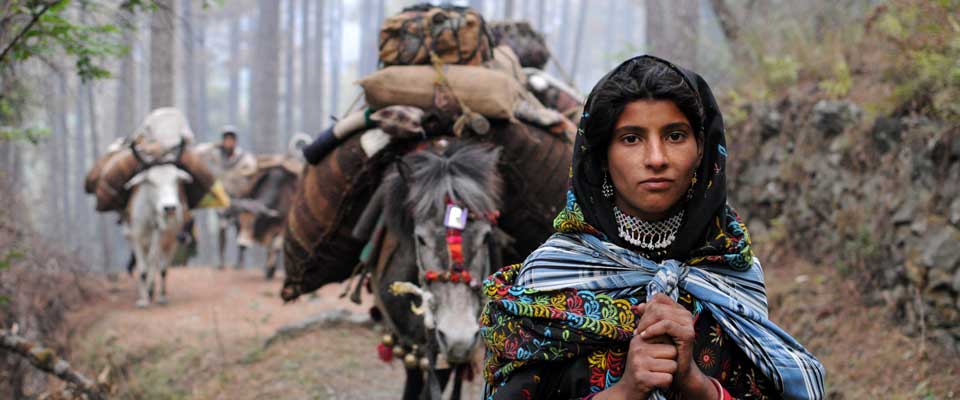
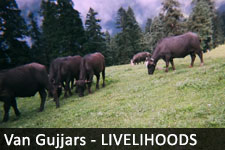
Buffalo also contribute to ecological and economic diversity. Their manure supports soil fertility, their milk can be processed into ghee, curd, and other products, and their saleable value can help families manage emergencies. The lived experience of a herder, illustrated in this account of daily herding life, is essential for understanding why livestock decisions cannot be separated from seasonal movement and community rights.
| Buffalo type or population | Useful characteristics | Conservation priority |
|---|---|---|
| Local Himalayan foothill buffalo | Hardiness, walking ability, low-input survival | Document and maintain community herds |
| Murrah-influenced animals | Higher milk potential and established market demand | Prevent loss of local adaptation |
| Bhadawari-influenced animals | Efficient use of feed and valuable milk quality | Support responsible selective breeding |
| Mixed village populations | Broad genetic variation and practical resilience | Record performance without excluding local types |
| Migratory pastoral herds | Knowledge-based selection and seasonal adaptation | Protect mobility, grazing, and water access |
Community Knowledge Is A Genetic Resource
Breed conservation depends on more than semen banks or livestock records. Pastoral communities hold detailed knowledge about lineage, calving history, temperament, fodder preferences, illness, and milk yield. Elder herders can often identify family lines that perform well under particular routes and climates.
Recording this knowledge can make breeding decisions more transparent while respecting community ownership. Participatory registers, photographs, basic health records, and local naming systems can help identify valuable animals without forcing every buffalo into a rigid official category.
Better Husbandry For Stronger Herds
Reliable access to clean water, mineral supplements, vaccination, deworming, and emergency treatment can improve herd health without changing its genetic character. Fodder banks and locally available feed are especially important during winter, drought, migration, or periods when forest access is restricted.
Milk marketing also affects conservation. When producers receive fair prices and can reach collection centers, they have a stronger reason to keep productive buffalo and invest in calves. Training in hygienic milking, value addition, and cooperative management can turn genetic potential into stable household income.
Practical Priorities For Conservation
A balanced program should avoid treating milk yield as the only measure of success. Useful performance indicators may include fertility, longevity, calf survival, walking capacity, disease resistance, milk quality, and the cost of maintaining an animal through different seasons.
SOPHIA’s work with Van Gujjar and Himalayan village communities provides a setting for connecting livestock development with indigenous rights and sustainable pastoral livelihoods. Conservation becomes more effective when communities help define the goals, manage the records, and benefit from the results.
- Map local buffalo populations and document their seasonal movement.
- Record parentage, calving intervals, health history, milk yield, and longevity.
- Establish community-led breeding groups that value hardy local animals.
- Improve veterinary outreach, vaccination, water access, and fodder security.
- Link producers with fair milk markets and practical value-addition training.
Protecting Himalayan buffalo diversity requires action at the herd, household, and policy levels. Support community-led livestock programs, share credible research, and work with organizations such as SOPHIA to strengthen pastoral rights, animal health, and sustainable milk-based livelihoods.