

When a Van Gujjar Elder First Saw a Motor Vehicle
For a Van Gujjar elder, a motor vehicle was more than a new machine. Its engine announced a change in a landscape where people, buffalo, milk and supplies moved along forest paths at the pace of animals.
SOPHIA’s media and photo archive preserves a Van Gujjar elder’s account of the first time he saw a motor vehicle. He remembers an arrival that turned an ordinary route into an event and revealed how closely transport and isolation are linked.
The memory also carries larger questions: how can roads and services improve village life without weakening the forest, domicile and pastoral rights on which Van Gujjar communities depend?
A Landscape Measured in Animal Tracks
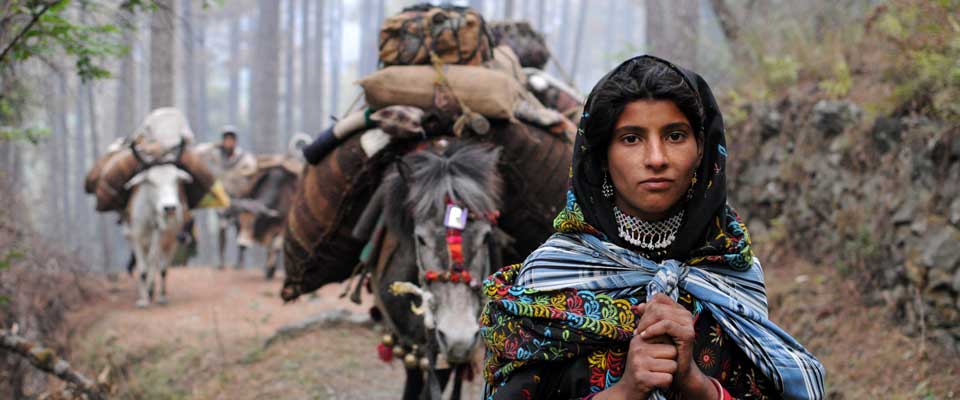
Before the engine arrived, distance was understood through familiar measures: a walk to a grazing ground, a buffalo’s load, a halt beside a stream. Forest tracks served movement and livelihood, linking seasonal camps with villages, markets and places where essential goods could be obtained.
For communities spread across Uttarakhand, Himachal Pradesh and Uttar Pradesh, reaching those destinations could take much of a day or several days. A vehicle promised speed, but the track had to accommodate its size, weight and turning path.
The Day the Engine Reached the Village
The elder’s memory is of the vehicle itself as an event. Its sound carried before its shape could be seen, and people approached with a mixture of curiosity and caution. The unfamiliar object belonged to a world of engines and roads, yet it had entered a landscape organised around animals and customary use.
The scene matters because technology did not arrive in isolation. It came with drivers, officials, traders or visitors, each with interests that could affect a community. The first sighting opened a practical question: would the machine serve the village, or would decisions about its use be made elsewhere?
A New Relationship with Distance
Once the novelty passed, possibilities multiplied. Milk could travel farther before spoiling, supplies could be carried more efficiently, and a journey to a clinic, market or government office could become more manageable. Buffalo husbandry remained central, but new transport could support the milk value chain rather than replace the animals.
Improved access could also bring stronger government presence, new markets and outside influence. For SOPHIA, the significance therefore lies in community authority: pastoralists need a voice in decisions about roads, services and trade, especially where those decisions touch forest access and customary residence.
Progress Without Losing the Forest
Progress is not simply measured by whether a road reaches a settlement. A route can open services and markets while narrowing grazing space, disturbing forest ecosystems or increasing pressure on a fragile landscape. The people who live with those consequences must help define what improvement means.
Vehicle access can support sustainable pastoral livelihoods when communities retain control over their routes, resources and dealings with buyers. It can weaken those livelihoods when transport expansion bypasses local priorities or favours exploitation over long-term security.
Reading the Memory from Australia
Australian readers encounter mechanised movement every day: trams cross central Melbourne, traffic streams through Sydney’s motorways, and vehicles keep to the left. In regional Victoria and New South Wales, tanker trucks collect milk from dairy farms, while farmers’ markets connect local food with an origin story.
The comparison is useful, but the forests, buffalo and customary rights of the Himalayan foothills are not Australian counterparts. They are a distinct reality. This account invites respect for that difference while highlighting a shared concern: technology should widen people’s choices, not decide their future.
The Details That Make the Memory
The remembered scene can be read on two levels: what happened, and what changed afterwards.
The encounter
- An engine broke the familiar quiet of the forest.
- People gathered because the vehicle was unlike anything they had seen.
- It negotiated a route used mainly by people and animals.
- Curiosity was mixed with uncertainty about who had brought it and why.
The details are modest, yet they show why a single arrival can carry a long history of remoteness, exclusion and adaptation.
What followed
- Transporting milk, supplies and other goods became easier to imagine.
- Journeys to markets, clinics and administrative offices could become shorter.
- New roads promised access but could also affect forests and grazing.
- Community control over that access became part of a wider rights struggle.
Together, these threads place the vehicle within SOPHIA’s broader work in social mobilisation, advocacy, government engagement and partnerships with other NGOs. The technology is visible; community organisation and rights-based demands are the deeper story.
Turn Listening into Support
Listening to the elder is also a way to understand SOPHIA’s purpose. The organisation works with Van Gujjar and Himalayan village communities to strengthen Indigenous rights, forest and domicile rights, sustainable pastoral livelihoods, buffalo husbandry and milk marketing.
Explore the media and photo archive, read about SOPHIA’s projects and communities, and use the website’s ways to get involved. For readers in Australia, connect with SOPHIA through its engagement and partnership channels, and support community-led action for forest rights, sustainable pastoral livelihoods, buffalo husbandry and fair milk marketing.