




Understanding Van Gujjar kinship and clan networks
Tucked into the foothills where the Shivaliks meet the upper Gangetic plains, the Van Gujjar community has moved buffalo herds between winter lowlands and summer alpine meadows for centuries. Their homeland spans Uttarakhand, Himachal Pradesh, and western Uttar Pradesh, including some of India's most contested forest frontiers. SOPHIA works alongside these pastoralists to defend their rights, livelihoods, and way of life.
Kinship is the scaffolding on which Van Gujjar society rests. It shapes marriage, governs grazing access, organises migration, and decides who speaks for whom in conflict. Understanding this system is essential for anyone hoping to engage meaningfully with the community.
For Australian readers, kinship organising rural life is familiar. Aboriginal nations across Arnhem Land and the Western Desert still order daily life through moieties and skin names, while cattle stations in Queensland's Gulf Country are often run by multigenerational families. Van Gujjar clan networks offer a parallel lens on how pastoral societies — from the Kimberley to Kumaon — bind themselves together.
A heritage of mobile pastoralism
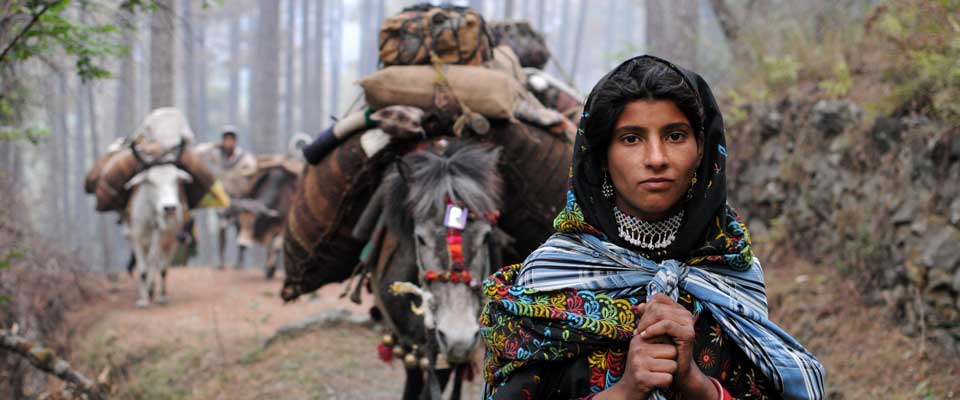
Van Gujjars are buffalo pastoralists whose wealth and identity are measured in livestock. Buffaloes provide milk and dung, and herding them demands constant movement. Each year, families walk their herds up through the sal forests into the bugyals, the alpine meadows where grass grows thick through the monsoon.
The seasonal rhythm mirrors old droving traditions in Australia. Pastoralists in the Kimberley or along the Strzelecki Track still muster cattle across vast leases, reading seasons written in grass and rain. The underlying logic of mobility as survival remains the same in both countries.
The architecture of patrilineal clans
Van Gujjar society is organised around patrilineal clans, with descent, inheritance, and clan membership traced through the father's line. Each clan controls traditional grazing beats, water sources, and forest patches used for generations. Clan elders hold detailed mental maps of these territories and the location of waterholes in dry months.
Clan membership carries responsibilities as much as rights. A herder is expected to share grass in lean times, contribute labour at communal works, and stand by relatives when disputes arise. The system resembles multigenerational pastoral dynasties across outback Queensland, where a station family's reputation carries weight across neighbouring leases.
Marriage alliances and the gotra network
Marriage among Van Gujjars is regulated by gotra exogamy: a person must marry outside their own gotra. The rule weaves alliances between families that would otherwise remain distant, with bride and groom negotiations involving gifts of livestock, cash, and ritual exchange that bind the two families for decades.
Such alliances are familiar across Australian country towns. In dairy regions like Gippsland and northwest Tasmania, intermarrying farming families have built strong cooperatives and shared marketing boards — a fair-dinkum pattern of families bolstering each other across generations. When families are bound by marriage, cooperation in trade and crisis becomes natural.
Seasonal migration and territorial cooperation
No Van Gujjar clan migrates alone. The annual trek from foothills to alpine meadows involves coordination with neighbouring clans on shared routes and access to forest produce along the way. Herders from different clans camp side by side, share salt licks, and exchange news about predators and water conditions.
Indigenous ranger programmes on Cape York and in the Kimberley show similar coordination between traditional owner groups across overlapping country. Cooperation is not optional.
Decision-making councils and community leadership
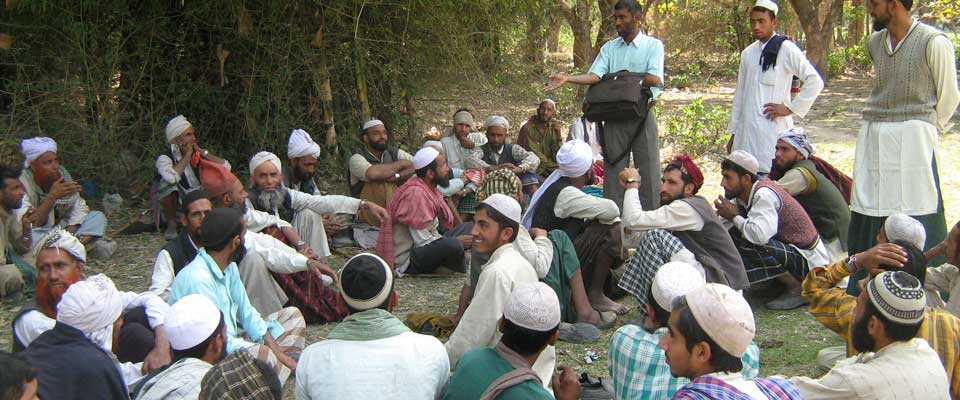
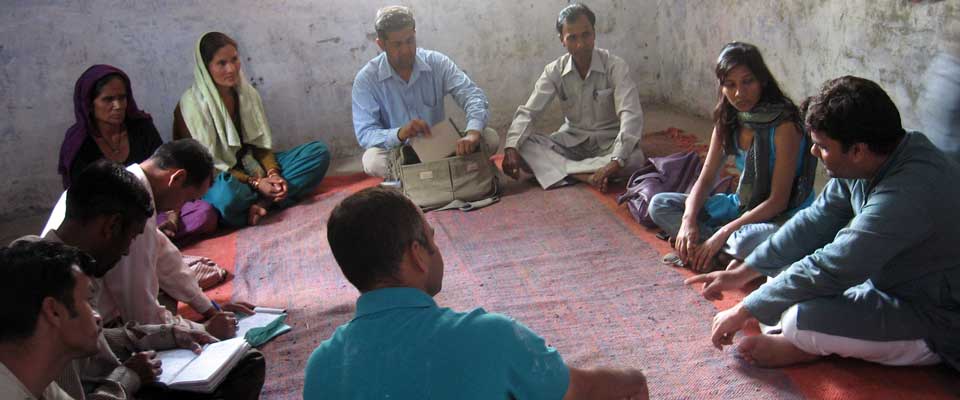
Each Van Gujjar clan is led by a council of elders known locally as the chaudhray, who meet to resolve disputes, allocate grazing, and plan migrations. Decisions are reached through consensus, often after long discussion. Women play a significant role in these discussions.
The structure of clan governance has parallels with the Anangu Pitjantjatjara Yankunytjatjara Lands in central Australia, where community councils across multiple language groups coordinate land management over an area the size of a small European country. In both cases, the council is where customary law meets the practical demands of the day.
Conflict resolution between clans
Disputes between Van Gujjar clans typically concern grazing boundaries, water rights, livestock straying, or accusations of witchcraft. Resolution follows customary procedure, with elders from both sides meeting at a neutral site, often with mediators drawn from allied clans. The aim is restoration of relationships rather than punishment.
In Australia, similar restorative practices are embedded in Aboriginal law across the Northern Territory, where peacemaking circles and traditional owners work alongside magistrates to find outcomes that heal rather than punish. The philosophical thread is recognisable: kinship ties are too valuable to be severed by a single grievance.
Modern pressures on traditional bonds
Van Gujjar kinship networks face pressures from forest conservation policies, urban migration, and the uncertainty of forest rights claims under Indian law. Younger herders sometimes leave the migration for school or wage work in Dehradun or Delhi, weakening the transmission of customary knowledge. Conservation projects that restrict grazing can split clans when members disagree over compensation.
Similar challenges play out on the Australian rangelands, where pastoralists navigate competing demands from mining, conservation reserves, and Indigenous land use claims. Holding a kinship system together requires patient work, legal advocacy, and audiences willing to listen.
Ways to stand alongside the Van Gujjar community
- Read SOPHIA's project pages to learn about current forest rights and domicile work in Uttarakhand and Himachal Pradesh.
- Support buffalo husbandry and milk marketing programmes that give pastoralist families a sustainable income.
- Amplify the voices of Van Gujjar elders through SOPHIA's media and photo archive.
- Partner with SOPHIA on advocacy initiatives that engage Indian government departments and other NGOs.
- Volunteer time or professional skills in research, communications, or community development projects.
- Share this article with friends, colleagues, and networks interested in Indigenous rights or pastoralism.
Visit SOPHIA's website to explore the projects, meet the team, and find practical ways to support the Van Gujjar and Himalayan village communities the organisation serves. Donate, partner, or sign up to stay informed about community-led pastoralism, forest rights, and advocacy work.