




The Legal Status of Van Gujjars as Scheduled Tribes
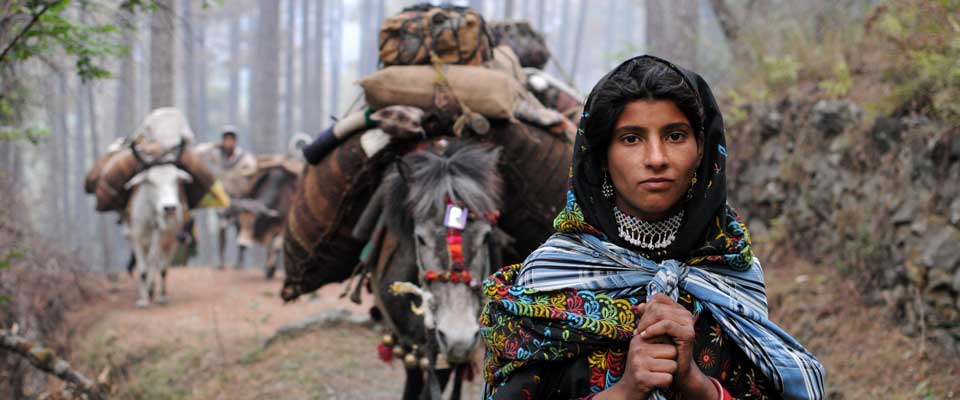
Van Gujjars are traditionally mobile buffalo pastoralists living across the Himalayan foothills and forest landscapes of northern India. Their seasonal movement, Muslim identity, distinctive language, and dependence on buffalo milk distinguish them from many settled farming communities. Yet cultural identity and legal recognition do not always follow the same path.
The phrase “Scheduled Tribe” refers to a constitutional category in India, rather than a general description of an indigenous or forest-dwelling people. For Van Gujjar families, legal status can vary according to the state where they live, the wording of official lists, and the documents available to prove residence and community identity.
This history matters to SOPHIA’s work in Uttarakhand, Himachal Pradesh, and Uttar Pradesh. Rights over forests, domicile, education, welfare schemes, and pastoral livelihoods are closely connected to whether public authorities recognise a community’s identity and its customary way of life.
How Scheduled Tribe Status Is Created
The Constitution of India gives the President authority to specify Scheduled Tribes for each state or union territory under Article 342. Parliament can later amend those lists. This means a community may have Scheduled Tribe status in one state but not in another, even when families share ancestry, language, occupations, and cultural practices.
The system is therefore different from a single national register. Recognition depends on historical evidence, administrative recommendations, political advocacy, and parliamentary action. Official classification may also fail to reflect how a mobile pastoral community has lived across changing district and state boundaries.
In practical terms, legal status can affect access to reserved education places, public employment, scholarships, political representation, and targeted development programmes. It does not automatically settle questions of land ownership or forest access, which are governed by additional laws and administrative procedures.
Van Gujjar Life Before Modern Classification
Van Gujjars have traditionally moved with buffalo herds between winter settlements in the Shivalik foothills and summer grazing areas in the Himalayan forests. Their economy has centred on milk, ghee, animal care, and relationships with nearby villages and markets. Seasonal mobility has often been treated by officials as a problem of settlement rather than as a skilled pastoral system.
Colonial forest laws changed this relationship. Forests were increasingly mapped, reserved, and managed for state purposes, restricting customary grazing and movement. After independence, protected areas, forest departments, conservation rules, and changing boundaries continued to shape Van Gujjar routes and access to resources.
Their history has parallels with debates familiar in Australia, where Aboriginal and Torres Strait Islander communities have had to defend cultural connection to Country within systems created by governments. The comparison is not exact, but it shows why legal categories can shape everyday survival, identity, and participation in public decisions.
State Lists Produce Different Outcomes
The legal position of Gujjars is not uniform across northern India. Gujjars are recognised as a Scheduled Tribe in Himachal Pradesh, while Gujjar communities in Jammu and Kashmir have also received Scheduled Tribe recognition. These entries do not automatically extend to Van Gujjars living in Uttarakhand or Uttar Pradesh.
In Uttarakhand, Van Gujjars have generally been treated through other administrative categories, including the Other Backward Classes framework, rather than as a separately listed Scheduled Tribe. In Uttar Pradesh, Gujjar classification has also historically followed state-specific arrangements. The exact benefit available to a family depends on the relevant state list and valid certificates.
Key factors in the legal record include:
- The state where a person is ordinarily recognised as resident
- The precise community name used in the official schedule
- Caste or tribe certificates issued by competent authorities
- Documentary evidence of domicile and family background
- Whether Parliament has amended the relevant state list
Uttarakhand And The Recognition Gap
For many Van Gujjars in Uttarakhand, the central issue is that their distinct forest-based identity is not clearly reflected in the Scheduled Tribe list. Families may have lived in the region for generations, yet seasonal movement can make domicile documents, school records, land papers, and permanent addresses difficult to obtain.
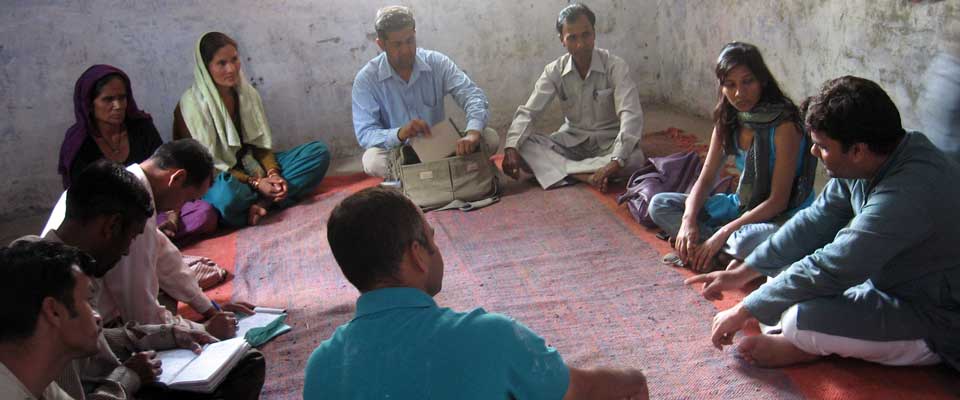
This creates practical barriers. A household may be recognised as a forest-dependent community under one programme, treated as an OBC family under another, and still lack the documents needed to claim residence or welfare benefits. SOPHIA’s rights-based work helps communities document experiences, organise collectively, and engage with government departments.
The issue is relevant to Australian readers who may know how strongly addresses shape access to services. A family moving between rural Queensland and Sydney, for example, may still use Medicare and formal identity documents, while a mobile pastoral family in the Himalayan foothills can face much greater difficulty proving a stable administrative location.
Forest Rights And Domicile Questions
The Scheduled Tribes and Other Traditional Forest Dwellers (Recognition of Forest Rights) Act 2006 offers an important legal route for recognising individual and community forest rights. It includes eligible traditional forest dwellers, although proving residence, occupation, and customary use can be difficult for mobile communities.
Forest rights are separate from Scheduled Tribe status. A Van Gujjar family does not need a Scheduled Tribe certificate for every possible claim under the Forest Rights Act, yet the lack of recognition can affect how officials understand its history and credibility. Community evidence, local testimony, and careful records are often essential.
This differs from Australia’s Native Title Act 1993, which addresses traditional laws and customs connected with land and waters through a distinct legal process. Australian audiences may also recognise the importance of the Racial Discrimination Act 1975 and state heritage laws, although India’s forest-rights framework has its own constitutional and administrative history.
Recognition And Pastoral Livelihoods
Scheduled Tribe recognition could strengthen political voice and access to targeted services, but it would not by itself protect every grazing route or guarantee secure forest residence. Van Gujjar livelihoods also depend on veterinary care, safe migration corridors, milk collection, fair prices, schooling, and respectful government engagement.
Their milk economy connects remote settlements with wider markets. This has a useful Australian comparison: shoppers in Melbourne, Brisbane, or Perth may buy dairy products through supermarkets, cooperatives, or farmers’ markets without seeing the seasonal labour behind production. In the Himalayan foothills, transport, refrigeration, animal health, and middlemen can determine whether milk income remains viable.
Community priorities commonly include:
- Secure access to seasonal grazing and forest routes
- Recognition of customary residence and domicile
- Buffalo vaccination, fodder, and veterinary services
- Fair milk prices and reliable collection systems
- Education that accommodates seasonal movement
Why The History Still Matters
Legal recognition is shaped by history, but it also shapes the future. When policy treats pastoral mobility as backward or temporary, families can be pushed away from livelihoods that have sustained forests, animals, and local economies. When authorities recognise community knowledge, decisions can become more practical and accountable.
Australian readers can see a similar tension in everyday policy debates about remote services, Indigenous land rights, regional transport, and access to fresh food. Even routine habits such as buying milk at a supermarket or attending a weekend farmers’ market depend on legal, environmental, and economic systems that are often invisible to consumers.
Understanding the Van Gujjar case requires attention to the difference between identity, constitutional classification, forest rights, and domicile. It also requires listening to communities themselves rather than assuming that one legal label can describe every family and every state.
Support informed community action by learning about SOPHIA’s work, sharing reliable information about Van Gujjar rights, and contributing to partnerships that strengthen pastoral livelihoods, forest access, and dignified public services.