




Who qualifies as a traditional forest dweller under Indian law
In India, the phrase “traditional forest dweller” is closely connected with the Forest Rights Act, 2006. The law recognizes that many communities have lived in, used, protected, and depended on forests for generations without holding conventional land titles.
The legal framework is especially important for indigenous and pastoral communities whose homes, grazing routes, food systems, and livelihoods are linked to forest landscapes. It creates a process for recognizing these relationships while setting specific eligibility requirements.
Understanding the definition helps communities, local organizations, and public authorities distinguish genuine forest rights claims from general access or short-term occupation. It also clarifies why community evidence and local institutions are central to the claims process.
The statutory meaning
The Forest Rights Act uses two related categories: “forest-dwelling Scheduled Tribes” and “other traditional forest dwellers.” Both categories concern people or communities who primarily reside in forests or on forest land and depend on those areas for bona fide livelihood needs.
A person does not qualify simply because they collect firewood, visit a forest, or have occupied land recently. The relationship must be substantial, continuing, and connected to residence and livelihood. The law is intended to recognize pre-existing rights rather than create an unrestricted right to enter or settle in any forest.
For Scheduled Tribe claimants, the relevant community must be recognized as a Scheduled Tribe in the area and must meet the residence and livelihood connection required by the Act. For other communities, the law adds a historical residence requirement.
The two legal pathways
A forest-dwelling Scheduled Tribe must primarily reside in and depend on forest or forest land for genuine livelihood needs. The Act does not require the claimant to prove ownership through a registered deed. Customary use, cultivation, grazing, collection of minor forest produce, and community access may all be relevant, depending on the right claimed.
An “other traditional forest dweller” must also primarily reside in forests or on forest land and depend on it for livelihood. In addition, the person or community must have primarily resided in the forest for at least three generations before 13 December 2005, the date the Forest Rights Act was introduced in Parliament.
The Act and its rules treat one generation as 25 years. In practice, this creates a 75-year historical residence test. The requirement may be established through different kinds of evidence and does not mean that every family must possess a document dated exactly 75 years ago.
Residence, livelihood, and pastoral life
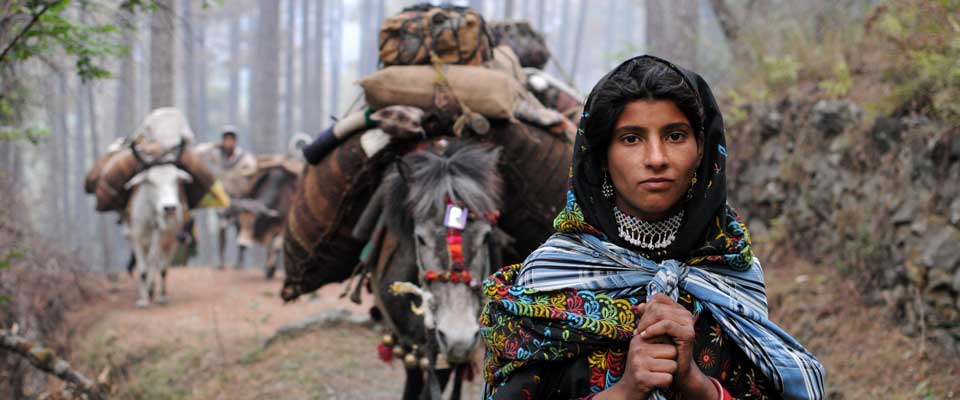
Residence does not always mean a permanent house in one fixed location. Seasonal migration, customary grazing routes, temporary shelters, and repeated movement between forest areas may form part of a pastoral community’s established way of life. The evidence must show a continuing relationship with the forest rather than occasional or commercial use.
For Van Gujjar and other pastoral communities, buffalo rearing can connect family income, food security, forest access, and cultural identity. Information about buffalo husbandry practices can help explain why grazing landscapes and seasonal movement are essential to a community’s livelihood.
The phrase “bona fide livelihood needs” also matters. It points to subsistence and customary economic activity, including cultivation, grazing, fishing, collection of minor forest produce, and related uses. It does not automatically protect every activity carried out in a forest or convert a commercial enterprise into a recognized forest right.
What kind of proof can support a claim
The Forest Rights Act rules allow a wide range of evidence. Official records may include government documents, forest settlement records, maps, census material, notices, or records of traditional rights. However, documentary evidence is not the only route available to claimants.
Physical features such as houses, cultivation, burial grounds, grazing areas, community facilities, and customary paths may help establish residence and use. Statements from older residents, community members, neighboring villages, and local institutions can also be relevant. The absence of a formal title should not be treated as automatic proof that no right exists.
| Legal category | Core requirements | Examples of relevant evidence |
|---|---|---|
| Forest-dwelling Scheduled Tribe | Scheduled Tribe status, primary forest residence, and dependence on forest land for livelihood | Community records, residence evidence, customary use, local testimony |
| Other traditional forest dweller | Primary forest residence, livelihood dependence, and residence for three generations before 13 December 2005 | Historical records, maps, family testimony, structures, community evidence |
| Community or pastoral claimant | Collective dependence on forest resources or customary routes | Grazing patterns, seasonal movement records, shared facilities, Gram Sabha testimony |
The role of the Gram Sabha
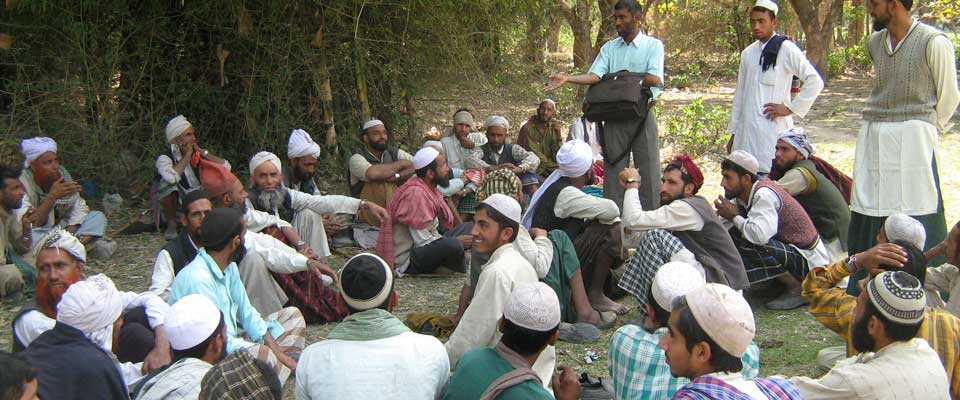
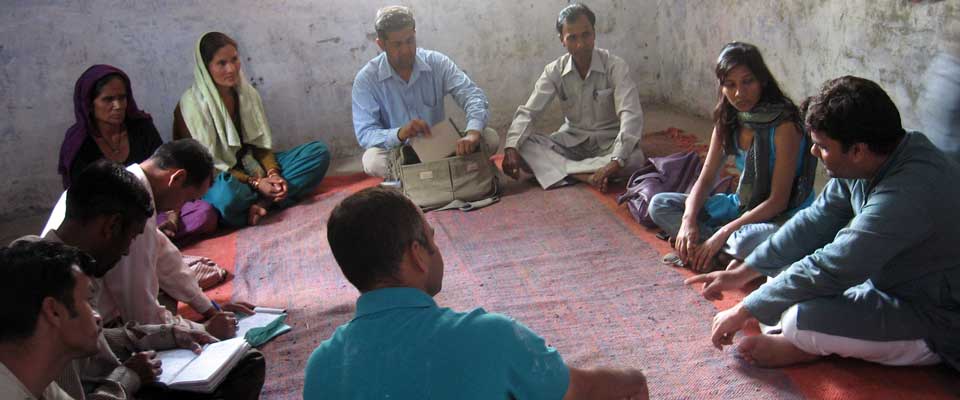
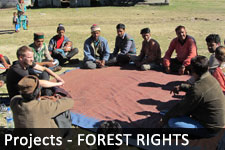
The Gram Sabha is the first formal authority in the recognition process. It receives claims, considers evidence, prepares findings, and forwards recommendations to the Sub-Divisional Level Committee. This makes participation at the village level essential, particularly where rights are shared by an entire pastoral or forest-dependent community.
The process should be transparent and inclusive. Women, seasonal migrants, remote hamlets, and families without written records must have a meaningful opportunity to present evidence. A claim should not be rejected merely because one expected document is unavailable when other credible forms of proof exist.
The Sub-Divisional Level Committee reviews the Gram Sabha’s recommendation, while the District Level Committee makes the final decision under the statutory process. Claimants should receive reasons for rejection and have access to the appeal process where the law permits.
Rights are broader than individual land titles
Recognition may cover individual self-cultivation and habitation, but it can also include community rights. These may relate to grazing, access to minor forest produce, seasonal resource use, fishing, customary routes, and the management or protection of community forest resources.
A legally recognized right comes with responsibilities. Communities are expected to protect wildlife, forests, and biodiversity and to follow applicable conservation requirements. Recognition should therefore be understood as legal security combined with community stewardship, rather than unrestricted private ownership.
For organizations working with Himalayan villages and Van Gujjar settlements, legal literacy can support stronger claims, better engagement with government committees, and more secure pastoral livelihoods. Community mapping and careful documentation can preserve knowledge that is often missing from official records.
Practical steps for a stronger claim
- Identify whether the claim is individual, community, pastoral, or connected to forest resource management.
- Record customary residence, seasonal movement, grazing areas, cultivation, and forest-based livelihood activities.
- Collect varied evidence, including oral testimony, local maps, photographs, government records, and community resolutions.
- Participate actively in the Gram Sabha process and ensure that women and mobile households are represented.
- Request written reasons for any rejection and use the available review or appeal mechanisms.
A clear understanding of the legal definition can help communities present their history in terms recognized by Indian law without reducing that history to a single document. SOPHIA’s rights-based work and partnerships can support communities seeking recognition, dignity, and secure livelihoods across the Himalayan region. Support local awareness, share reliable information, and engage with community-led efforts to protect forest and pastoral rights.