



A Van Gujjar family’s search for land title
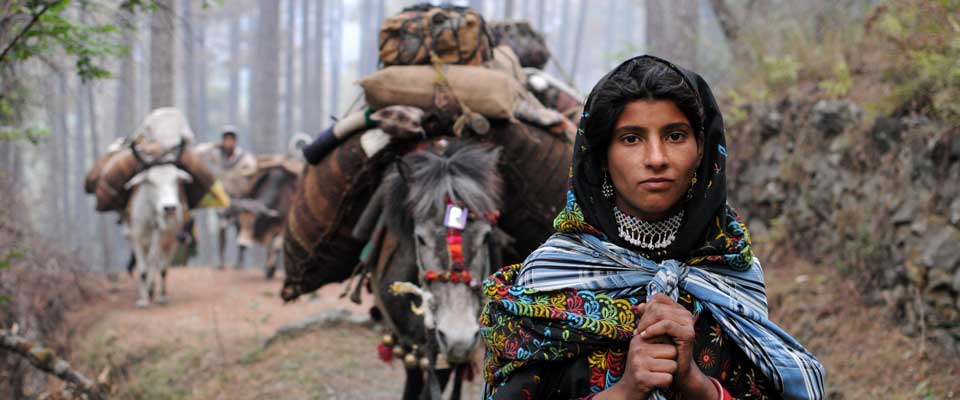
Before the first light reaches the forest, a Van Gujjar family is already preparing for the day. Their buffaloes need feeding, children need to get ready for school, and household goods must be arranged for the seasonal journey between forest grazing grounds and the village. For generations, this movement has shaped their work, culture, and relationship with the Himalayan landscape.
For one family, however, long residence and careful stewardship did not guarantee legal security. Their home stood on land they had occupied for years, yet official records did not clearly recognize their claim. Without a land title or community forest rights document, each visit from a revenue official brought uncertainty.
This account is a composite story reflecting concerns faced by many pastoral families in Uttarakhand and nearby regions. It shows why documentation, collective action, and support from organizations such as SOPHIA matter in the pursuit of indigenous rights and secure livelihoods.
A life shaped by seasonal movement
The family lived with a rhythm familiar to Van Gujjar households. During warmer months, they moved with their buffaloes toward higher grazing areas. When winter approached, they returned to a settled hamlet where relatives, children, and livestock shared a modest home.
Their livelihood depended on milk sales, animal health, and access to pasture. The family did not see the forest as unused land. It provided fodder, water, shade, medicinal plants, and routes followed by their ancestors. Their mobility was a form of pastoral knowledge, not evidence that they lacked a permanent connection to the region.
When residence was not recognized
The family’s difficulty began when they attempted to obtain formal recognition for their homestead and customary forest access. Officials asked for documents that were difficult to produce: old receipts, survey records, proof of continuous residence, and evidence of occupation in a system that had rarely recorded pastoral communities accurately.
The absence of paperwork created a damaging cycle. Without a title, the family struggled to access housing support, public services, credit, and infrastructure. Their children’s address could be questioned during school admissions, while repairs to the home or construction of a livestock shelter felt risky. These are among the challenges facing communities whose customary rights remain poorly documented.
Building a claim through community action
At first, the family approached the local office alone. Their application moved slowly, and explanations changed from one visit to another. They soon learned that an individual petition carried less weight than a claim supported by neighbors, elders, maps, witness statements, and records of community use.
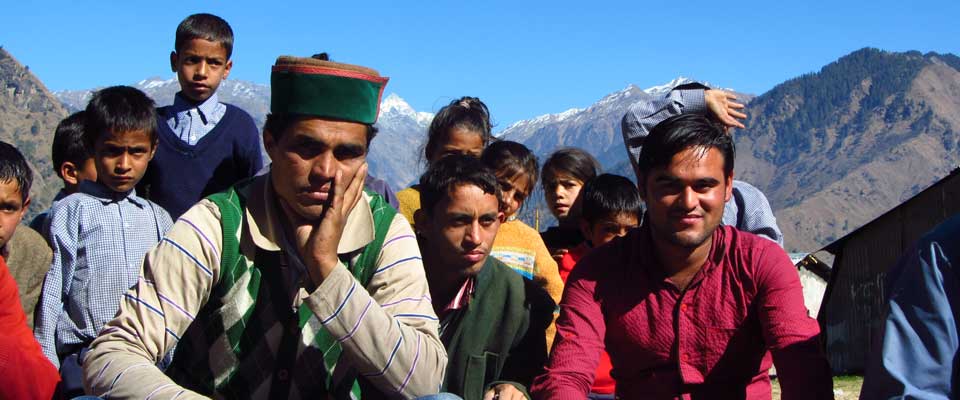
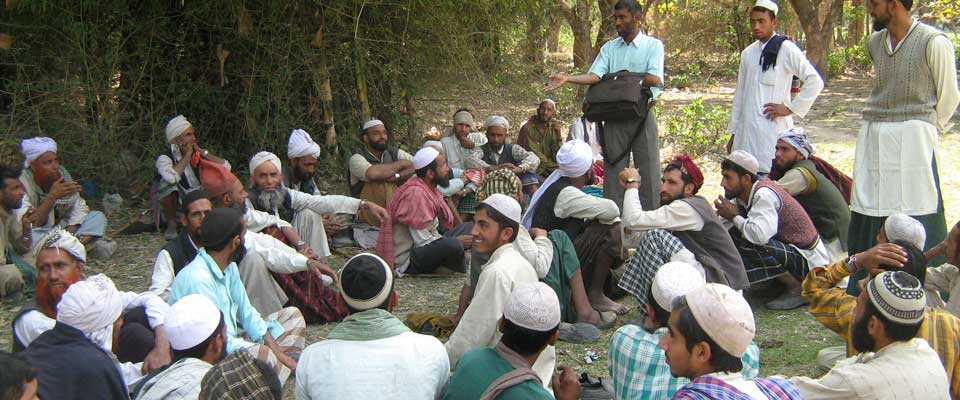
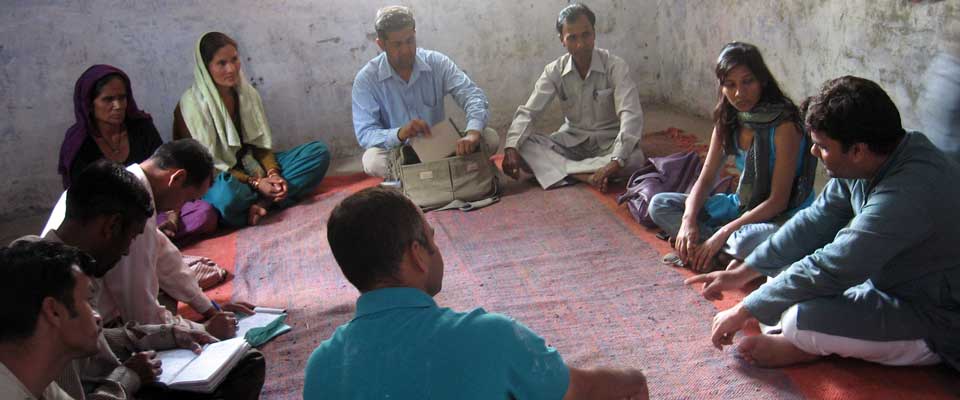
With help from local organizers, the family joined village meetings and discussed the Forest Rights Act, domicile rights, and the role of the Gram Sabha. Women participated in documenting household histories and identifying traditional routes, grazing areas, water sources, and settlement boundaries. This process transformed a private worry into a shared rights campaign.
The family collected available documents, including identity papers, school records, milk cooperative information, and statements from older residents. Community testimony helped explain why the family moved seasonally and why their connection to the land could not be measured by a single fixed address.
What a secure title can change
A land title is more than a certificate. For a Van Gujjar household, it can provide protection from eviction, a stronger basis for public services, and greater confidence when investing in a home or animal shelter. Recognition of community forest rights can also protect collective access to grazing, water, and forest resources.
| Without secure recognition | With recognized rights |
|---|---|
| Fear of eviction or displacement | Greater protection for the household |
| Unclear access to grazing and water | More secure customary resource use |
| Difficulty proving residence | Stronger access to services and documents |
| Limited investment in housing | Confidence to improve homes and shelters |
| Individual applications with little support | Collective Gram Sabha-based advocacy |
Legal recognition does not solve every problem. A title must be followed by practical access to roads, schools, healthcare, veterinary services, fair milk markets, and respectful administration. Still, it creates a foundation from which the family can plan instead of repeatedly defending its presence.
The role of women and young people
The mother in the family had managed milk sales, household finances, and animal care for years, yet her contribution was rarely visible in official discussions. Community meetings gave her an opportunity to describe daily labor, seasonal movement, and the risks created by insecure housing. Her testimony strengthened the family’s claim and encouraged other women to attend village forums.
Young people also became important advocates. They helped scan documents, record oral histories, understand application procedures, and communicate with local groups. Their involvement connected traditional knowledge with new forms of documentation, ensuring that the family’s story would not disappear when older generations were no longer able to speak for it.
Turning recognition into a lasting livelihood
Once a family’s residence and customary rights receive recognition, the next task is making that security meaningful. Better veterinary care can reduce livestock losses. Transparent milk collection and fair pricing can improve household income. Training in buffalo husbandry can support animal health without undermining pastoral traditions.
Sustainable development should respect mobility rather than forcing every family into an unfamiliar livelihood. Government departments, village institutions, and civil society partners can work together on grazing plans, water access, education, healthcare, and documentation. Rights-based support is strongest when communities help design the solutions and monitor their implementation.
Practical steps that strengthen a land claim
- Gather identity papers, school records, old residence evidence, and livelihood documents in one secure file.
- Record oral histories from elders about settlement, migration routes, grazing grounds, and community boundaries.
- Present claims collectively through the Gram Sabha and maintain written records of every submission and hearing.
- Include women, youth, and tenant or landless pastoral households in meetings and documentation efforts.
- Link land rights with veterinary services, milk marketing, education, housing, and access to public welfare schemes.
The family’s struggle is still part of a wider process. A successful claim may begin with one household, but it can encourage an entire community to document its history and demand fair treatment. When Van Gujjar families are recognized as rights-holders and partners in conservation, land governance becomes more humane and more effective.
Support rights-based work with SOPHIA by sharing community stories, strengthening local advocacy, and helping ensure that pastoral families are heard in decisions affecting their homes, forests, and livelihoods.